Don't sign the builder's contract without watching this.
A free 42-minute webinar for first-time new construction buyers in Murrieta & the Inland Empire.
Builder-Independent · DRE #01470570 · NMLS #161940
What You'll Learn
The 12 Things Every First-Time New Construction Buyer Should Know
Plain-language coverage of every step, from the model home walk-in to your 11-month warranty inspection. No jargon, no pressure.
From framing to keys
We walk the community with you, before, during, and after the build.
Lot selection, builder incentives, structural options, pre-drywall walks, final orientation, and your 11-month warranty list. One advisor, the whole journey.
60-Second New Build Profile
What kind of new construction home are you picturing?
Share a few quick details. We'll match you to builders, communities, and floor plans worth touring, and flag any to skip.
Your Shortlist
Tell us about the new build you're picturing.
We'll hand-pick a few builders and floor plans worth your time , with honest notes on incentives, reputation, and red flags.
Buyers We've Walked Through Construction
Real Stories from First-Time New Build Buyers
The conversations that mattered most, from contract signing to keys.
"We walked into the model home alone the first time. Bringing in a buyer's advisor before signing saved us $32,000 in incentives we didn't know existed and caught a structural change-order the builder had quietly added."
Priya & Aaron K.
First-time new build
"The pre-drywall walk was eye-opening. They photographed a missing fire-block and a plumbing slope issue that the inspector confirmed. Both fixed before drywall, saved us a year-two nightmare."
Marcus T.
Spec home buyer
"Most useful thing: they told us which upgrades to skip. We saved $18K at the design center and added a screened lanai post-close for a third of what the builder quoted."
Elena & Sam R.
Build-to-order buyer
You Asked, We Answered
Common New Construction Buyer Questions
Straight answers to what buyers wonder before, and during, their first new build.
Do I really need my own agent if I'm buying new construction?+
Yes, and the builder pays them. The on-site sales rep works for the builder. Your own buyer's advisor reads the contract, negotiates incentives, attends every walkthrough, and protects you on warranty claims. Cost to you: zero. You just need to bring your agent on your very first visit (or register them before you walk in).
Is new construction priced 'firm', or can you negotiate?+
There's always negotiation. Builders rarely move on base price (it would mess up neighborhood comps), but they regularly move on closing costs, rate buy-downs, design center credits, and upgrades. End of quarter and end of year are the strongest windows.
Should I use the builder's preferred lender?+
Get a quote from them, then shop it against two outside lenders. Compare APR, not rate. The preferred-lender credit often disappears once you compare true loan costs. Use the builder's lender only if their final number actually wins after the side-by-side.
Do I need a home inspection on a brand-new home?+
Absolutely. We recommend three: pre-drywall (catches structural, electrical, plumbing, HVAC), pre-closing (full home, blue-tape punch list), and 11-month (the warranty inspection 90% of buyers skip). Each one catches issues the builder won't volunteer.
What does a 1-2-10 warranty actually cover?+
One year on workmanship and materials (caulking, paint, drywall, fixtures). Two years on mechanical systems (HVAC, plumbing, electrical). Ten years on major structural defects. Everything else is on you. We help you build the year-one punch list before the one-year window closes.
Which upgrades are worth it through the builder?+
Anything inside the walls, structural options, electrical pre-wire, plumbing rough-ins, gas lines, recessed cans, HVAC zoning. Most cosmetic upgrades (flooring choices, fixtures, blinds, paint, low-end carpet upgrades) are 2–4× cheaper post-close from local contractors. We walk through your full upgrade list before you commit.
What's a CDD or Mello-Roos, and should I worry about it?+
They're community development bonds that fund roads, utilities, and amenities. They look like part of your tax bill and can add $100–$400/month for 20–30 years. Not bad, not good, but you must know the number before you sign, and decide whether to pay the bond off at closing.
What if the builder delays closing by months?+
It happens often. We help you negotiate real deadlines into the contract up front (not vague 'estimates'), extend your rate lock without paying, manage your lease end-date, and document delay claims if they affect your financing or moving costs.
Can I add my own contractor for fence, deck, screen enclosure, etc.?+
Usually yes, after close, subject to HOA approval. Doing these projects post-close with a local contractor typically costs 30–50% less than through the builder. We help you decide what to add now vs. after move-in.
How long does the whole new-construction process take?+
Spec/inventory homes: 30–60 days from contract to close. Build-to-order: 6–10 months for production builders, 10–18 months for semi-custom. We give you a realistic week-by-week timeline before you sign anything.
Why Buyers Choose Us
Builder-Independent, Buyer-First Representation
We work for you, not the builder. Every page of the contract, every line of the change order, every walkthrough.
Builder-Independent
Reads Every Contract Page
Upgrade-ROI Honesty
On-Site at Every Walkthrough
Warranty Claim Coaching
Inspector & Lender Network
Plain-English Communication
Post-Close, Year-One Support
Whenever You're Ready
Don't walk into the model home alone.
Whether you're touring this weekend or 12 months out, get the playbook first. Then bring us with you.
The Complete Guide
The First-Time Buyer's Guide to Brand-New Construction
Buying a brand-new home is different from buying a resale, and almost nothing about the process is built to protect you by default. The on-site sales rep is friendly, the model is gorgeous, and the contract is sixty pages of language that quietly favors the builder. This guide walks you through the entire journey, in the order it actually happens, with the things we wish every first-time new construction buyer knew before they signed.
Step 1: Bring Your Own Agent Before You Walk In
This is the single most important step, and it's almost always free. The on-site builder rep works for the builder. Their job is to sell homes, not to negotiate against their employer for you. A buyer's agent who works independently of the builder reads your contract, shadow-shops competing communities for leverage, attends every walkthrough, and protects you on warranty claims. The builder pays your agent's commission, so it costs you nothing. The only catch: you typically need to register your agent on your very first visit. After that, builders often refuse to honor outside representation.
Step 2: Understand the Real Incentive Landscape
Builders rarely move on base price (it would lower the appraised comps in their own community), but they move constantly on closing costs, rate buy-downs, design center credits, and standing-inventory discounts. The strongest negotiation windows are the last two weeks of any quarter and the last six weeks of the year. Stack incentives carefully, and remember a $40K design-center credit is not the same as $40K in cash.
Step 3: Read the Contract Like It's Going to Court
The builder contract isn't a normal real estate contract. It's a custom document, often 60–100 pages, with arbitration clauses, vague completion dates, change-order traps, and earnest-money language you've probably never seen. Don't sign it the day you tour. Take it home. Read it with someone who has read fifty of them. Negotiate every change in writing.
Step 4: Choose Your Lot Like It's Permanent
Almost everything about a new construction home can be changed later. The lot cannot. Look at the plat map before you fall in love with a homesite. Where does water drain? What's being built on the empty lots beside and behind you? Where will the sun be at 4 PM in July? Corner, cul-de-sac, and water-view lots usually carry a premium, sometimes worth it, often not.
Step 5: The Design Center, Where Buyers Quietly Overspend
The design center is the builder's most profitable room. Markups of 2–4× retail are normal. The rule we give every client: anything inside the walls, structural changes, electrical pre-wire, plumbing rough-ins, gas lines, HVAC zoning, should be done by the builder, because doing them post-close is much harder. Almost everything cosmetic, fixtures, paint, blinds, flooring upgrades, screen enclosures, basement finish, is cheaper and often better done with a local contractor after move-in.
Step 6: Inspect a Brand-New Home (Yes, Really)
"New construction doesn't need inspections" is one of the most expensive myths in residential real estate. We recommend three: pre-drywall (catches structural, electrical, plumbing, and HVAC issues you'll never see again), pre-closing (full home inspection and blue-tape punch list), and 11-month (the warranty inspection most buyers skip, leaving thousands in covered repairs on the table).
Step 7: Walkthroughs, The Three That Matter
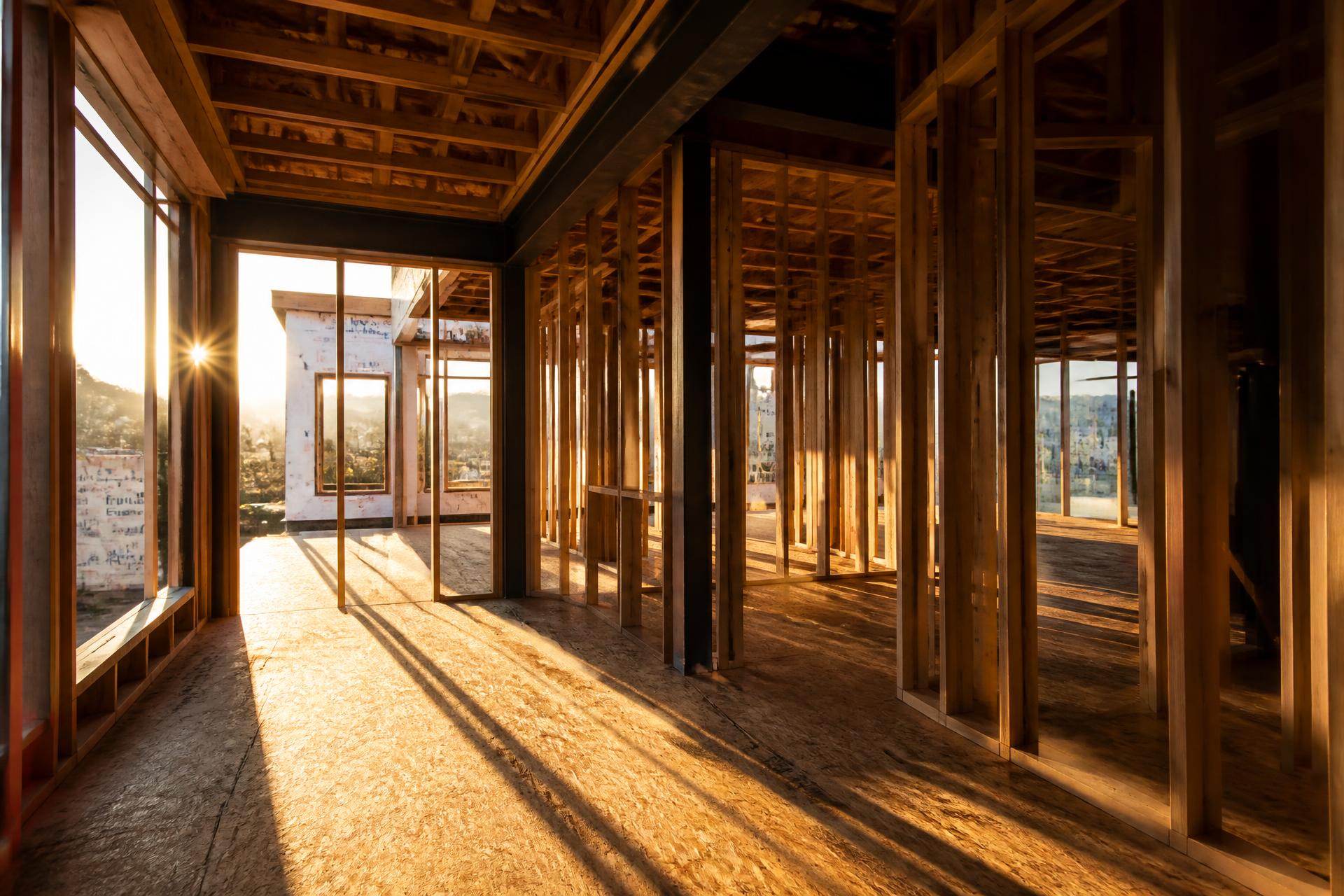
Pre-drywall is your one chance to photograph every wire and pipe. The blue-tape walk is where you mark every cosmetic and functional issue with painter's tape, and the superintendent signs off on the list. The final walk happens right before closing, every outlet, every faucet, every appliance, garage door, HVAC heat and cool. Anything not working should delay closing, not become a "we'll fix it later" promise.
Step 8: Closing, Keys, and the 11-Month Warranty
Most new-build closings are quick and quiet. After you move in, keep a running list of every issue, door alignment, drywall cracks, paint touch-ups, HVAC quirks, appliance hiccups. In month ten, formally submit everything in writing before your one-year workmanship warranty expires. This single sprint saves the average buyer $4,000–$8,000 in repairs they would otherwise pay for themselves.
A Few Reminders
Never sign the contract the day you tour. Always price the preferred lender against two outside lenders, comparing APR not rate. Always inspect, even when the builder says you don't need to. Always document walkthroughs with timestamped photos. And never bring an agent into a builder community for the first time without registering them, it's the one step that costs you nothing and protects you completely.
Education, Representation, Home
New construction is wonderful when done right, a home built for you, with everything brand-new, under warranty, in a community shaped for the next twenty years. Our job is to make sure you arrive there without the expensive surprises that catch most first-time new build buyers off guard.
Watch the free webinar above, browse this guide whenever you'd like, and reach out the moment you're considering your first model home visit. The earlier we're with you, the more we can protect.